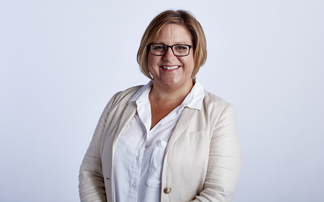




Has this woman found a mass-market 'advice' solution?

Author: Rahul Odedra
Professional Adviser | 01 Sep 2011 | 08:00

Categories: Investing in the profession

Topics: Wise Monkey Financial Coaching| financial coaching

simonne-gnessen

No products, no intermediation and just £85 per hour. Has Simonne Gnessen, founder of Wise Monkey Financial Coaching, found a profitable way for IFAs to cater for the mass market? Rahul Odedra investigates...

After a decade as an IFA, Simonne Gnessen stripped away the products and intermediation (including the regulatory burdens) to help clients plan their futures and control their money.

Now, having been a finance coach since 2002, she is looking to spread the word and believes advisers themselves could offer what she does, helping clients at a fraction of the cost of full-blown advice.

So what exactly does a finance coach do? In her own words, it is about “supporting people with their finances and helping them congruently move towards their goals”. She adds: “It is also about helping them with their emotional relationships with money.”

Gnessen spent more than a decade working as an IFA, including a stint at Fiona Price & Partners, a firm which notably focused on serving female clients.

However, she did not particularly enjoy the product side of the work and never identified herself as a “sales person”.

So, in 2002, she made the big leap and, for almost ten years now, Gnessen has been working as a financial coach with Wise Monkey Financial Coaching.

While the term ‘finance coach’ is well used in the US, Gnessen insists she developed her own version of it through her experiences as a financial adviser and personal development, including the Kinder Institute EVOKE life planning course and neuro-linguistic programming training.

Now a registered life planner, she explains how her typical client might be a woman in her late 40s who realises something doesn’t quite add up on her bank statements.

“They might have a good income but they do not feel like they have anything to show for it. They might have a lot of debt.

“They have tried things before and not succeeded. They recognise there is something not working and they want to shift some unconscious behaviour as well as finding some practical solutions.”

Although an initial 30-minute phone call is free, Gnessen charges £85 an hour, with the first meeting usually lasting two hours. To complement the time she spends with clients, she has also created a raft of spreadsheets to help them control their spending.

While a lot of her work might cross over with the sort of things financial advisers deal with, there are many aspects which are clearly far removed.

One client she is dealing with at the moment in Dubai – she has a number of long-distance clients, who she interacts with via Skype – was spending all his money on an expensive lifestyle and impressing women.

“He went out there to make money but he is caught up in a system where he earns good money but also spends a lot of it,” she said.

“We are looking at the unconscious stuff: you are here for a reason, to save money, but you are not doing that. What is this all about trying to impress women? The whole thing is about shifting behaviour.”

Although she left the profession a decade ago, Gnessen shares many IFAs’ concerns about the impact the retail distribution review will have on access to financial advice.

“I am worried from the consumers perspective that once it becomes fee-based there will be even less consumers who will feel they can get full, impartial advice.

“I am in favour of enhanced professionalism and fees, but not all consumers will understand that.”

Page 1 of 2

More from professional adviser

Recommended reading

Categories

Topics

Comments

Direct to Provider

This model makes a good deal of sense and is in many ways the purest example of why being an IFA ought to mean. The IFA advises and the client then follows that advice if they want to. The fly in the ointment though is the stance taken by some wraps, platforms and providers who will NOT deal direct with clients. At present a client may pay twice when being advised in this way. Post RDR regulators will need to ensure that the current requirement tod deal thru an IFA to gain access is stopped. The perhaps we can have advisers who advise without any product/provider bias

Posted by: John Blackmore

02 Sep 2011 | 11:43
Complain about this comment

Brilliant!

Brilliant! That's basically how I have structured my business for last 20 years. Not as a high earner but as someone who goes out of the way to 'help' clients. I believe other IFS’s do also; and many get little or no recognition for their efforts. Apart from trust, respect and satisfaction.

Posted by: Chris Clarke

02 Sep 2011 | 11:44
Complain about this comment

Fantastic

I'm delighted to see Simmone get the recognition she deserves on this. I had a discussion with her about this on the IFA Life forum. I am far more passionate about financial education than I am about the traditional IFA role. I had asked if there was any way to structure this into a profitable business. Simmone very kindly took time to give me some advice on that. It didn't really occur to me despite it being blindingly obvious that this could solve the mass market advice problem. Well Done Simmonne!!

Posted by: Andy Sheppard

02 Sep 2011 | 12:12
Complain about this comment

qualified regulated advice?

no mention on her website of being authorised by the FSA? when does guidence become advice?

Posted by: Paul Wilson

02 Sep 2011 | 13:05
Complain about this comment

No

A heating engineer came to me house this morning and advised me I needed a new heat exchanger in my boiler. Imagine how miffed I'd have been if he charged me for the advice and then left without fixing the problem. I could have tried to buy the part cheap online myself and then attempted a DIY fitting but I guess after a few wasted hours I'd have given up and die of hypothermia. This kind of service may desired by the odd DIY/boiler enthusiast but mass market it is not.

Posted by: rob simpson

02 Sep 2011 | 13:10
Complain about this comment

Yes

@Rob Simpson. This is absolutely the correct way to work in any industry. Advice first, purchase (if necessary!) second. You can put yourself in the privilidged position of giving the advice and then also IF the client chooses/whats you to fix the boiler or buy a pension you can. Whilst i think it's useful to do both, it's not imperative as long as you know where to subcontract out the other. Simmone chooses to dispense just the advice. Both services are chargeable but seperate.Suggestion the advice or the purchase is free at the expense of the other is lacking transparency or just devious, never mind a poor commercial decision for yourself or business. Good luck Simmone

Posted by: Nigel Barker-Smith

02 Sep 2011 | 16:00
Complain about this comment

A better market place

John Blackmore makes the same comment I have now been making for a long time - there is no free market. Simonne Gnessen's approach is a perfectly valid option in the financial services market, having much merit in not being tied to products - or even using products. But access to those products to make some of the solutions work is likely to create double cost levels. The FSA, and, by dereliction, the Office of Free Trading have made a total mockery of the whole advice market. The FSA have totally ignored S2(3)(c) and (f) FMSA 2000, thereby creating a market that does not operate in the consumers favour; there is precious little competition; read most blogs and there a distinct underlying theme of self absorption in Advisers' comments, probably because they too are terrified of were they are being pushed. The client doesn't count - it is the process that has become important. It is important that more people re-iterate John Blackmore's line - why should advice and implementation be tied by incompetent regulation rather than personal choice. And this is one reason why Rob Simpson misses the point - the urgent structure for financial advice (and even more so after 2012) is not a mass market. It is an elitist market, desired by neither the market nor the majority of advisers that service it. Ms Gnessen has chosen a non-regulated option that re-opens the advice market to very many more people. I hope she continues to succeed - and that the Regulator takes notice. The former is probable; the latter improbable.

Posted by: Glen McKeown

02 Sep 2011 | 17:57
Complain about this comment

What's not to like?

I agree, Nigel. It is a commercial structure that compensates Simonne for the advice she gives at an agreed fee for the prospective client and must surely make it easier for a person to engaged knowing they are committing only time and a modest fee. IF they like the offering and the adviser, they will appoint the adviser; if they don't they will have received value and the adviser will receive remuneration. It strikes me as an ideal approach at any time, even if RDR wasn't round the corner.

Posted by: Mike Ward

03 Sep 2011 | 19:10
Complain about this comment

An excited coach-in-training's view

As someone who's taken part in Simonne's financial coaching course with a view to becoming a coach myself, I can attest to her integrity, enthusiasm and knowledge. She evidently really cares about what she does. Her course was pretty life-changing and I'm really looking forward to using what I learned in my own future career.

Posted by: Tabitha

07 Sep 2011 | 19:46
Complain about this comment

Related articles

Most Read

Audio / Visual

Coffee Lounge

View all the winners here

PPR Structured Product Awards 2011

View all the winners here

This year we have 14 awards designed to mark out the very best products in a highly competitive and innovative market. This includes three new awards for 2011 to reflect the developments in this rapidly growing market: Best Dual/Multi-Index Product, Best Structured (Oeic) Fund and Best Structured Product Provider.

Events

event logo

International Fund & Product Awards 2012

14 Jun 2012 - 14 Jun 2012

London, UK

event logo

British Mortgage Awards 2012

03 Jul 2012 - 03 Jul 2012

London, UK

event logo

Cover Webinars

04 Jul 2012 - 04 Jul 2012

London, UK

Poll

Should there be a cap on hourly fees?

In Focus

Viewpoints