



Five Year Performer: Henderson's Stuart O'Gorman

Author: Jon Cudby
Professional Adviser | 29 Jul 2010 | 06:00

Categories: TMT

Topics: Henderson|

stuart-o-gorman-henderson

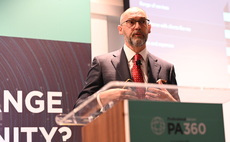
Stuart O’Gorman, manager of the £340m Henderson Technology fund, on being boring in a racy sector.

The boom and bust saw plenty of technology managers achieve fleeting stardom, only to disappear into obscurity. Stuart O’Gorman, manager of the Henderson Technology fund has been one of the survivors. He now runs the largest vehicle in the sector at £340m. His focus on valuation and steady outperformance has enabled him to avoid the bear-traps of technology investing and he remains top quartile over five years.

O’Gorman is guided by Moore’s law in his running of the fund. Gordon Moore, founder of Intel, said that every two years, semiconductors would either be half the size, half the cost or twice as fast. O’Gorman says this has held true since the 1960s and has a number of implications: “Technology companies can reach new markets as costs fall,” he says. “Extreme high end devices are now made for $20 in India. This means there is more and more value for money every year. It also means the playing field is constantly levelled.”

With this in mind, O’Gorman generally has two considerations when investing: the first is whether the product is any good: do people like using it? Does it save them money? But, he also believes people often spend too long analysing this and not enough time looking at the barriers to entry. He says: “There have been some wonderful technology products from which no-one has made any money – the palm pilot, contract manufacturing, the memory industry. If you have strong barriers to entry, Moore’s law is your friend – you can cut prices 10% and your margins still go up.”

The core of O’Gorman’s portfolio is therefore built on established businesses with a ‘great big wall’ around them. However, he will still buy some cyclical stocks if they become cheap enough. He says that most technology funds have had a difficult time beating the benchmark (MSCI Information technology for this fund) and therefore he remains ‘index aware’. He says, adjusted for a few timing anomalies, the fund has consistently beaten the index.

Liquidity

Liquidity is another consideration for O’Gorman. He says: “We run over £2bn. We have to be aware of liquidity. We saw during the bursting of the technology bubble that liquidity simply evaporated. Now, we have strict liquidity criteria that ensure we can get out of any position within two weeks. It is a key risk control for us and why we have lower volatility than many other technology funds.”

O’Gorman says the perception that technology stocks only rise at times of significant economic expansion and rising markets is erroneous. He adds: “Most people simply assume that if you like the economy, you buy technology. This isn’t true. The MSCI World IT index versus the MSCI World index shows a beta of 0.87 over 3 years.”

The Henderson Technology fund currently sits second out of the eight funds in the sector over five years. It has delivered an annualised five year return of 8.76%, outperforming the index in every discrete year except 2008 (when it was 0.1% behind).

O’Gorman says that although he has generated good performance from being early into stocks such as Google, avoiding the howlers such as eBay has also been important. Again, this has often come from a realistic assessment of the group’s barriers to entry. Nokia, for example, used to have a strong position, but saw its barriers to entry disappear.

O’Gorman says there is still a strong case for many technology stocks: they have a far more flexible business model than many other companies; they don’t tend to have pension liabilities; they outsource manufacturing, so can quickly adapt to the changes in the economic environment. Profits have been more robust than many other industries during the downturn.

He says that fear still depresses prices for some of the technology sector, which makes it difficult for there to be another bubble.

At the moment, ‘boring’ technology looks particularly good value: “The relative price to earnings of technology compared to the overall market multiple has not been as low since the 1990s. Then, it saw huge outperformance for the next decade and it did not have the huge cash piles it has today. ‘Boring’ technology is looking very cheap and Intel has just had the best quarter in its history. However, some of the cloud computing stocks are on very high multiples against the wider market – these ‘exciting’ areas can be expensive.” O’Gorman is happy to be boring in a racy sector.

More from professional adviser

Recommended reading

Categories

Topics

Comments

There are no comments submitted yet. Do you have an interesting opinion? Then be the first to post a comment

Related articles

Most Read

Audio / Visual

Coffee Lounge

View all the winners here

PPR Structured Product Awards 2011

View all the winners here

This year we have 14 awards designed to mark out the very best products in a highly competitive and innovative market. This includes three new awards for 2011 to reflect the developments in this rapidly growing market: Best Dual/Multi-Index Product, Best Structured (Oeic) Fund and Best Structured Product Provider.

Events

event logo

fund5live

21 Feb 2012 - 29 Feb 2012

London, UK

event logo

COVER Breakfast Briefing: Cash Plans

27 Mar 2012 - 27 Mar 2012

London, UK

event logo

Buy to Let Market Forum

17 Apr 2012 - 18 Apr 2012

London, UK

Poll

Should there be a cap on hourly fees?

In Focus

Viewpoints